Product Overview
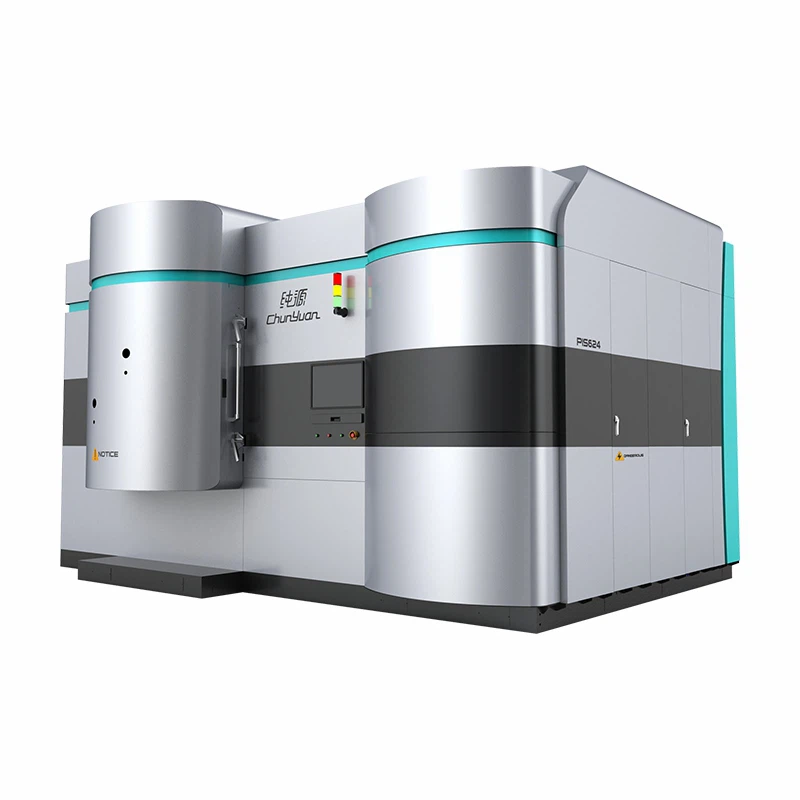
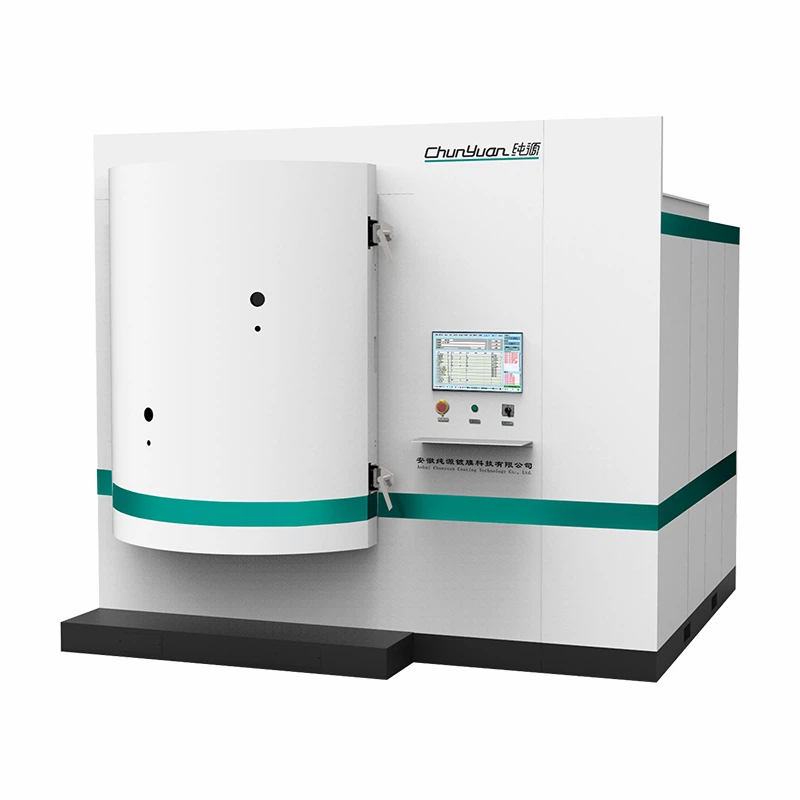
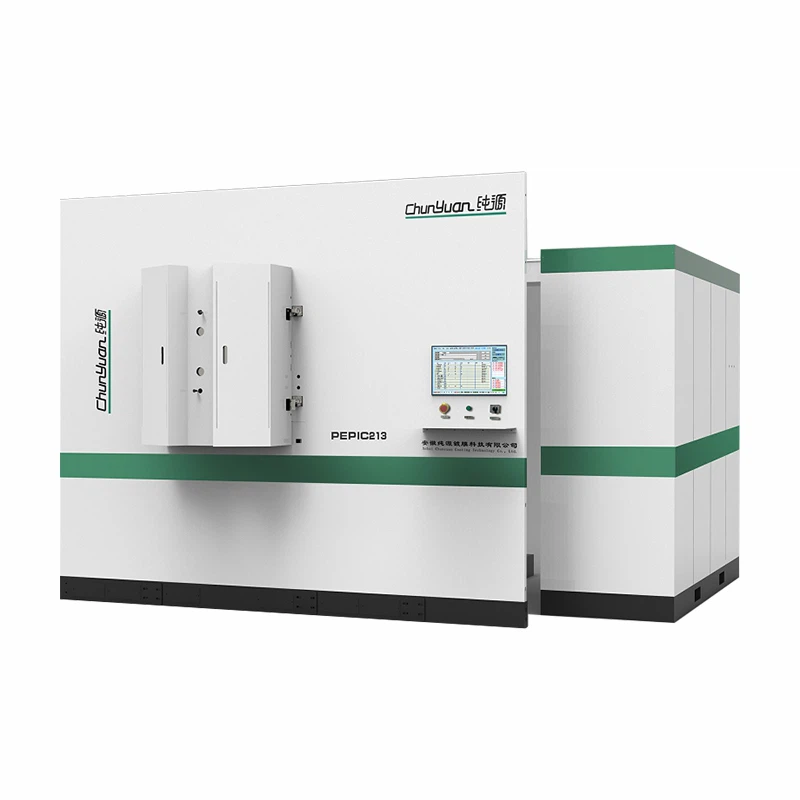
The PVD Composite Thin Film Equipment is an industrial vacuum deposition platform engineered for depositing multi-layer, alloy, and nanocomposite thin films. Integrating magnetron sputtering and cathodic arc sources within a single vacuum chamber, the system enables precise control over film microstructure, residual stress, and interfacial adhesion. Built for continuous production and advanced R&D, the platform accommodates metallic, ceramic, and polymer substrates with scalable chamber geometries.
-
![PVD Composite Vacuum Deposition Equipment]() PVD Composite Vacuum Deposition EquipmentThis industrial PVD composite vacuum deposition platform integrates multiple deposition techniques into a single chamber environment to deposit uniform, multi-layer metallic, alloy, or dielectric...view more
-
![PVD Hybrid Thin Film Deposition System]() PVD Hybrid Thin Film Deposition SystemThe PVD Hybrid Thin Film Deposition System integrates thermal evaporation, electron beam (e-beam) evaporation, and RF/DC magnetron sputtering within a single vacuum architecture. This platform...view more
-
![PVD Multi-Process Thin Film Equipment]() PVD Multi-Process Thin Film EquipmentThe PVD Multi-Process Thin Film Equipment is an integrated vacuum deposition platform engineered to combine multiple thin-film fabrication techniques—including RF/DC Magnetron Sputtering, Thermal...view more
-
![PVD Composite Deposition Equipment]() PVD Composite Deposition EquipmentIndustrial PVD Composite Deposition Equipment is engineered for multi-component, multi-layer, and nano-composite thin-film fabrication. The system integrates thermal evaporation, e-beam...view more
-
![PVD Composite Thin Film System]() PVD Composite Thin Film SystemIndustrial-grade vacuum coating system integrating magnetron sputtering (RF/DC/HiPIMS) and cathodic arc evaporation. Designed for continuous, multi-layer, alloy, and nano-composite thin-film...view more
-
![PVD Composite Thin Film Equipment]() PVD Composite Thin Film EquipmentThe PVD Composite Thin Film Equipment is an industrial vacuum platform designed to synthesize multi-layer, alloy, and graded thin films. Built on a modular 304L/316L stainless steel architecture,...view more


Technical Specifications
|
Parameter |
Specification Range |
|
Ultimate Vacuum Pressure |
<= 5.0 x 10^-5 Pa (Cryogenic/Turbomolecular pumping suite) |
|
Working Pressure |
0.1 Pa - 5.0 Pa |
|
Substrate Temperature |
Ambient to 800 °C (Closed-loop PID controlled) |
|
Deposition Sources |
Configurable: DC/RF Magnetron Sputtering, Pulsed DC, Filtered Cathodic Arc |
|
Thickness Uniformity |
< +/- 3% across standard 300 mm substrate carrier |
|
Chamber Material |
304L/316L Stainless Steel, mechanical ground and electro-polished (Ra <= 0.4 um) |
|
Power Supply Integration |
MF generators (10-100 kHz), RF generators (13.56 MHz), Pulsed DC bias |
|
Control System |
Industrial PLC + IPC with automated recipe execution, interlock monitoring, and batch data logging |
Composite Deposition Process
The system utilizes a hybrid physical vapor deposition architecture combining magnetron sputtering and cathodic arc technologies.
Multi-Source Synergy:
Simultaneous or sequential operation of multiple cathodes allows for abrupt or graded compositional transitions across the film stack.
Ion Etching Pre-Cleaning:
RF or DC plasma cleaning stages remove native oxides and surface contaminants prior to deposition to maximize coating-to-substrate adhesion.
Reactive Deposition Control:
Closed-loop optical emission spectroscopy (OES) regulates reactive gas injection (O2, N2, C2H2) to maintain stable compound stoichiometry and prevent target poisoning.
Substrate Biasing:
Synchronized pulsed bias power supplies bombard the growing film with high-energy ions, densifying the microstructure and tailoring residual compressive stress.
Film Materials
The equipment supports a broad spectrum of target materials for tailored functional requirements:

Transition Metal Nitrides & Carbides:
TiN, TiAlN, CrN, ZrN, TiCN for wear and corrosion resistance.

Nanocomposite & Multilayer Systems:
TiSiN, AlTiSiN, metal/ceramic nanolayers for extreme hardness and high-temperature thermal stability.

Transparent Conductive Oxides (TCO):
ITO, AZO, IGZO for optoelectronic and photovoltaic applications.

Pure Metals & Alloys:
Ti, Cr, Al, Cu, Stainless Steel, NiCr for electrical contact and diffusion barrier layers.
Applications
Precision Cutting Tools:
Deposition of super-hard, low-friction coatings (e.g., TiAlN) on carbide inserts, drills, and end-mills to extend operational lifespan under high thermal loads.
Automotive Components:
Friction-reduction and wear-resistant films on piston rings, fuel injection parts, and gear assemblies.
Optoelectronics & Displays:
Low-resistivity, high-transmission conductive oxide layers for touch panels and solar cell substrates.
Medical Devices:
Biocompatible and wear-resistant coatings on surgical instruments and orthopedic implants.
Customization & System Configuration
Engineering configurations are adapted to specific production facility constraints and process recipes:
Chamber Sizing:
Cylindrical or rectangular chamber options ranging from R&D batch systems (500 mm diameter) to large-scale production load-lock systems (1000 mm+).
01
Pumping Suite Selection:
Matching roots blowers, turbomolecular pumps, and cryogenic pumps based on required pump-down times and gas load profiles.
02
Substrate Fixturing:
Customized planetary rotation stages, 3-axis satellite rotation, or roll-to-roll modules designed for complex 3D geometries or continuous webs.
03
Automation Level:
Semi-automated manual load configurations or fully automated vacuum transfer systems with robotic substrate handling.
04
Manufacturing & Quality Control
Leak Detection:
Every vacuum chamber undergoes helium mass spectrometer leak testing to a threshold of < 1 x 10^-10 Pa * m^3 / s.
Weld Inspection:
Vacuum-side welds are TIG welded, ground, and polished, followed by X-ray or dye penetrant inspection upon request.
Electrical & Safety Compliance:
Control panels built in accordance with NFPA 79 or CE/IEC standards, featuring hardware interlocks for water flow, gas pressure, and electrical safety.
Factory Acceptance Testing (FAT):
Pre-shipment testing includes 72-hour continuous dry-run cycling, vacuum performance verification, and test coating deposition using client-specified recipes.
Site Preparation Guidelines: Comprehensive facility requirements document provided detailing utility interfaces (cooling water flow/pressure, electrical load, compressed air, exhaust).
On-Site Commissioning: Field service engineers execute mechanical alignment, vacuum leak checks, electrical tie-ins, and initial calibration.
Process Recipe Tuning: On-site collaboration with client metallurgists and process engineers to lock in target film thickness, stress, and hardness parameters.
Lifecycle Support: Remote diagnostics interface, localized spare parts inventory, and scheduled preventive maintenance programs.

FAQ
We're well-known as one of the leading pvd composite thin film equipment manufacturers and suppliers in China. If you're going to buy customized pvd composite thin film equipment made in China, welcome to get pricelist from our factory. For price consultation, contact us.