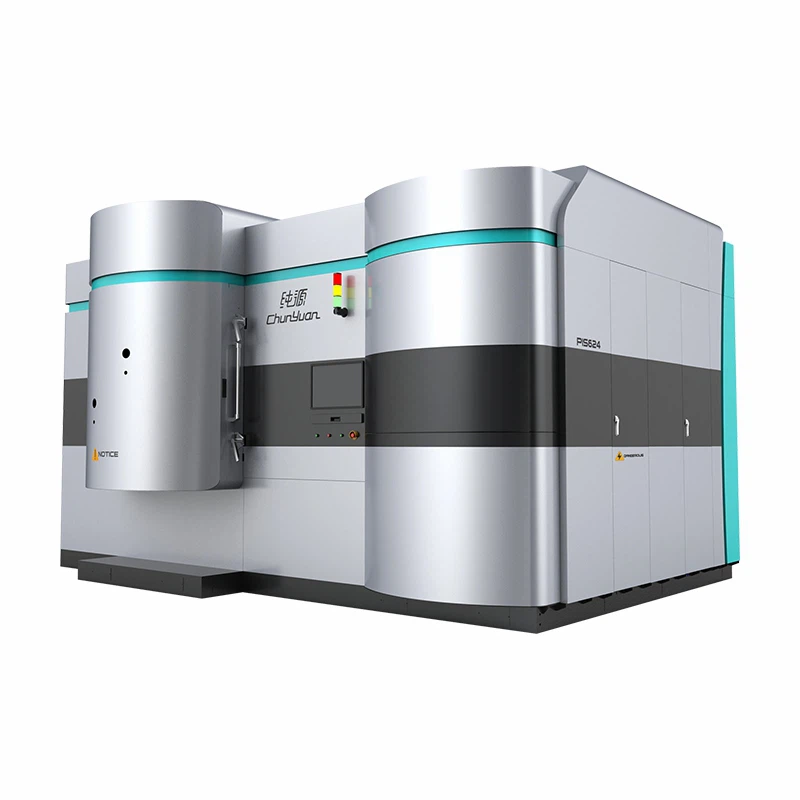
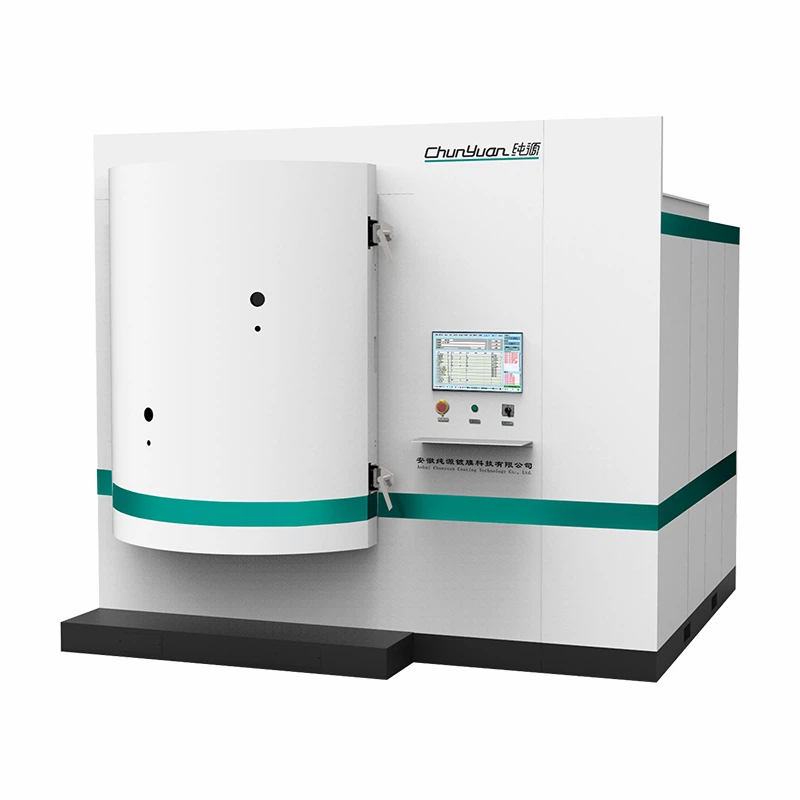
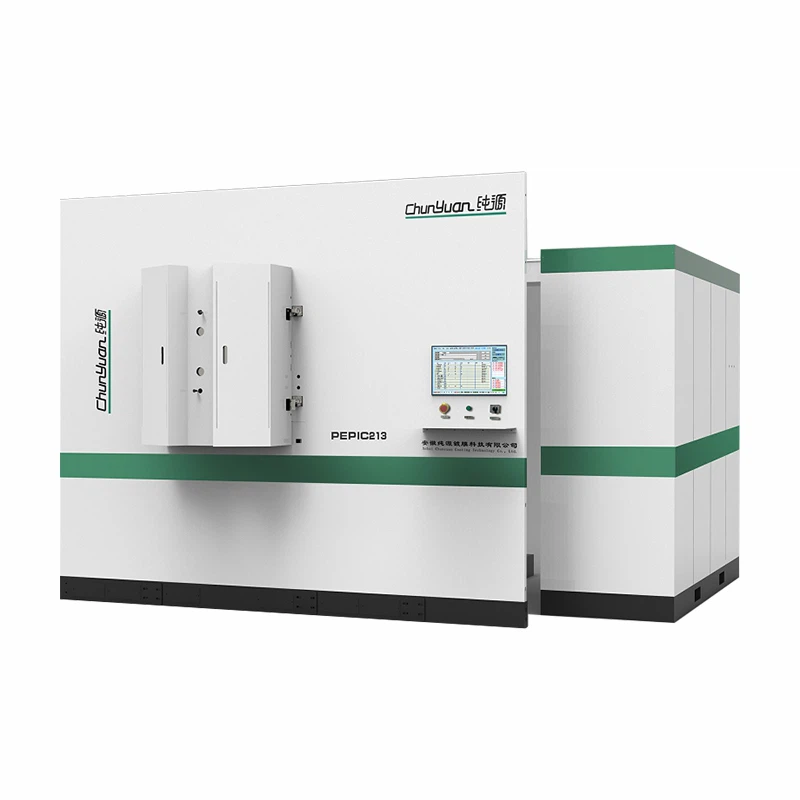
The working principle of DLC coating machine mainly includes two main processes: chemical vapor deposition (CVD) and physical vapor deposition (PVD).
Chemical vapor deposition (CVD)
CVD is a method of depositing thin films on the surface of substrates through gas phase chemical reactions. It is mainly divided into thermal CVD and plasma enhanced CVD (PECVD).
Thermal CVD: Decompose the reaction gas at high temperature to deposit thin films. It is suitable for large-area deposition, but has high requirements for temperature control.
PECVD: Use plasma to excite the reaction gas (such as methane) to form high-quality DLC films at low temperatures, which is suitable for heat-sensitive substrates.
Physical vapor deposition (PVD)
PVD deposits materials onto the surface of substrates through physical processes such as sputtering or evaporation. The main methods include:
Magnetron sputtering: Use ions to bombard the target material to deposit carbon atoms on the surface of the substrate, which is suitable for large-area uniform coating.
Ion beam deposition: uses high-energy ion beams to bombard the substrate to form a dense DLC film with higher smoothness and adhesion.