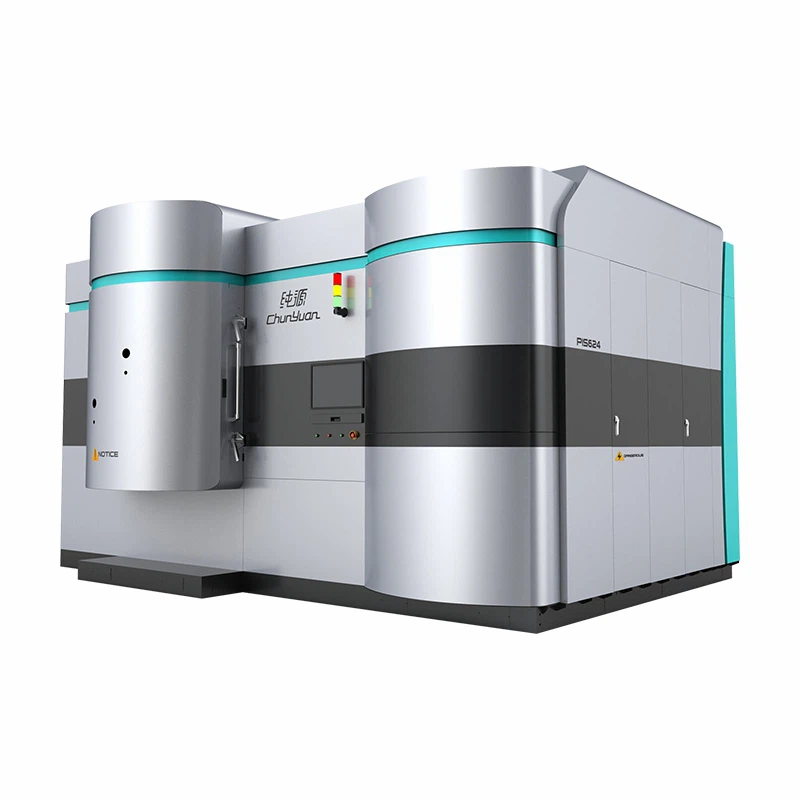
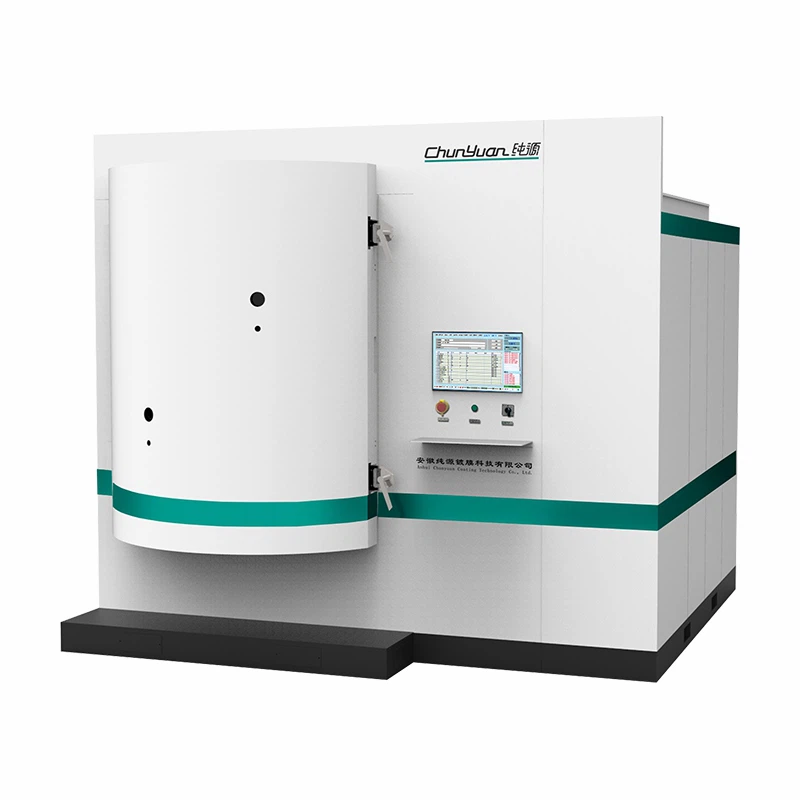
Vacuum coating is a technology that deposits metals, alloys, compounds and other materials on the surface of objects to form thin films in a vacuum environment through physical or chemical methods. Here is a detailed introduction:
Principle:
• Physical Vapor Deposition (PVD): Utilizing physical processes such as evaporation and sputtering to turn coating materials into gaseous atoms or molecules, which then deposit on the substrate surface to form thin films. For instance, in evaporation coating, the coating material is heated to vaporize into a gaseous state. The gaseous atoms or molecules move randomly in the vacuum and deposit on the substrate surface when they come into contact with it.
• Chemical Vapor Deposition (CVD): Through the chemical reaction of gaseous chemical substances on the substrate surface, solid substances are generated and deposited to form thin films. For example, under certain temperature and pressure conditions, gaseous compounds containing the elements of the coating material are decomposed and react on the substrate surface, and the resulting solid products will deposit on the substrate.
Main Methods:
• Vacuum Evaporation Coating: The coating material is placed in an evaporation source and heated to evaporate, allowing atoms or molecules to escape and condense on the substrate surface to form a film. It is commonly used for coating metal films, dielectric films, etc.
• Sputtering Coating: An ion beam generated by an ion source bombards the target material of the coating, causing atoms or molecules to sputter out and deposit on the substrate surface to form a film. It can be used to coat various metal, alloy, and compound films.
• Ion Coating: Under vacuum conditions, the coating material is ionized and then accelerated by an electric field to deposit on the substrate surface. It has strong adhesion and good film quality.
Application Fields:
• Optical Field: Coating on optical lenses can increase transmission or reduce reflection, improving imaging quality; it can also be used to manufacture mirrors, filters, and other optical components.
• Electronic Field: In semiconductor device manufacturing, it is used to make metal electrodes, barrier layers, insulating layers, etc.; it can also be used to coat electronic components to improve their wear resistance and corrosion resistance.
• Decorative Field: Coating gold, silver, chromium and other metal films on the surface of jewelry, watches, hardware products, etc., can enhance their aesthetic appeal and luster, as well as increase their wear resistance and corrosion resistance.
• Tool Field: Coating hard films such as titanium nitride and titanium carbide on the surface of cutting tools and molds can improve hardness, wear resistance and lubricity, and extend service life.