


In the realm of modern technology, anti - reflection (AR) coating machines play a crucial role in enhancing the performance of various optical components. As a leading supplier of AR Coating Machines, I am often asked about the electro - optical properties of the coatings produced by our machines. In this blog, I will delve into the details of these electro - optical properties and explain why they are so important.
1. Understanding Electro - Optical Properties
Electro - optical properties refer to the way a material responds to both electrical and optical stimuli. For coatings made by AR coating machines, these properties are of utmost significance as they directly impact the functionality and performance of the coated optical elements.
The primary electro - optical properties of AR coatings include refractive index, absorption coefficient, and reflectance. The refractive index is a measure of how much light bends when it passes through the coating. A well - designed AR coating has a carefully controlled refractive index that allows light to pass through the coated surface with minimal reflection. The absorption coefficient indicates how much light is absorbed by the coating. Ideally, an AR coating should have a very low absorption coefficient to ensure high transmission of light. Reflectance, on the other hand, is the proportion of incident light that is reflected from the coated surface. The goal of an AR coating is to minimize reflectance, which is typically achieved through a multi - layer design.
2. Refractive Index and Its Role
The refractive index of an AR coating is a key factor in determining its anti - reflection performance. By carefully selecting materials with appropriate refractive indices and arranging them in multiple layers, we can create a coating that effectively reduces reflection across a wide range of wavelengths.
Our AR coating machines are capable of depositing coatings with precise control over the refractive index. This is achieved through advanced deposition techniques such as physical vapor deposition (PVD). PVD allows us to deposit thin films of materials with high precision, enabling us to tailor the refractive index of each layer to meet specific requirements. For example, in a multi - layer AR coating, we can use materials with different refractive indices to create a gradient that gradually matches the refractive index of the substrate to that of the surrounding medium (usually air). This gradient helps to minimize the reflection of light at the interface between the coating and the substrate.
3. Absorption Coefficient and Light Transmission
Another important electro - optical property is the absorption coefficient. A low absorption coefficient is essential for AR coatings, as it ensures that most of the incident light is transmitted through the coated surface rather than being absorbed.
Our AR coating machines use high - purity materials and advanced deposition processes to minimize the absorption coefficient of the coatings. For instance, we carefully select materials that have low absorption in the visible and near - infrared regions, which are the most commonly used spectral ranges in optical applications. Additionally, our deposition processes are optimized to reduce the formation of defects and impurities in the coating, which can increase the absorption coefficient. By minimizing absorption, our coatings can achieve high levels of light transmission, making them ideal for applications such as camera lenses, eyeglasses, and solar panels.
4. Reflectance Reduction
The main purpose of an AR coating is to reduce reflectance. Reflectance can cause various problems in optical systems, such as glare, reduced contrast, and loss of light. By using our AR coating machines, we can produce coatings that significantly reduce reflectance.
The multi - layer design of our AR coatings is based on the principle of interference. When light waves interact with the multiple layers of the coating, they can interfere either constructively or destructively. By carefully controlling the thickness and refractive index of each layer, we can ensure that the reflected light waves interfere destructively, canceling each other out and reducing the overall reflectance. Our AR coating machines are equipped with advanced monitoring and control systems that allow us to precisely control the deposition process, ensuring that the thickness and refractive index of each layer are within the desired specifications.
5. Applications of AR Coatings with Superior Electro - Optical Properties
The electro - optical properties of the coatings produced by our AR coating machines make them suitable for a wide range of applications.
In the field of consumer electronics, AR coatings are used on smartphone screens, tablets, and computer monitors to reduce glare and improve visibility. By minimizing reflectance, these coatings enhance the user experience by making the display easier to read, especially in bright environments.
In the optical industry, AR coatings are essential for camera lenses, binoculars, and telescopes. They improve the image quality by reducing reflections and increasing light transmission, resulting in sharper, clearer images.
In the solar energy sector, AR coatings are applied to solar panels to increase their efficiency. By reducing the reflection of sunlight, more light can be absorbed by the solar cells, leading to higher power output.
6. Our AR Coating Machines and Their Advantages
As a supplier of AR Coating Machines, we take pride in the quality and performance of our products. Our machines are designed with the latest technology and advanced features to ensure the production of high - quality AR coatings.
One of the key advantages of our AR coating machines is their flexibility. They can be used to deposit a variety of materials, allowing us to create coatings with different electro - optical properties to meet the specific needs of our customers. Whether you need a coating for a visible light application or an infrared application, our machines can be configured to produce the desired coating.
In addition, our machines are equipped with advanced automation and control systems. These systems ensure consistent and reproducible coating quality, reducing the risk of human error and improving production efficiency. We also provide comprehensive technical support and training to our customers, ensuring that they can operate our machines effectively and achieve the best results.
7. Related Coating Equipment
In addition to our AR coating machines, we also offer a range of other coating equipment, such as Metal Coating Equipment, PVD Gold Plating Machine, and Plasma Spray Machine. These equipment are designed to meet the diverse coating needs of different industries.
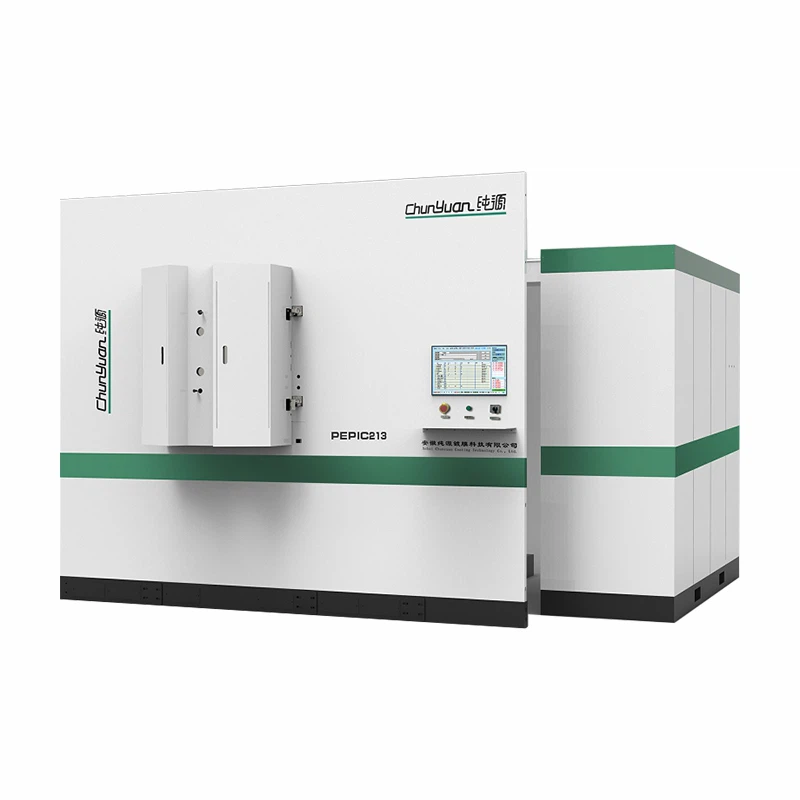

The Metal Coating Equipment is suitable for depositing metal coatings on various substrates, providing enhanced corrosion resistance, wear resistance, and electrical conductivity. The PVD Gold Plating Machine is used to deposit gold - like coatings on surfaces, which are widely used in the jewelry and decorative industries. The Plasma Spray Machine is capable of depositing thick coatings with high bonding strength, making it ideal for applications such as thermal barrier coatings and wear - resistant coatings.
8. Contact Us for Purchase and Consultation
If you are interested in our AR coating machines or any of our other coating equipment, we encourage you to contact us for further information. Our team of experts is ready to assist you in selecting the right equipment for your specific needs and providing you with detailed technical advice.
We understand that every customer has unique requirements, and we are committed to providing customized solutions. Whether you are a small - scale manufacturer or a large - scale industrial enterprise, we can offer you the most suitable coating equipment and services.
In conclusion, the electro - optical properties of the coatings made by our AR coating machines are carefully engineered to provide superior performance in various applications. With our advanced technology, high - quality products, and excellent customer service, we are confident that we can meet your coating needs. Don't hesitate to reach out to us and start exploring the possibilities of our coating equipment.
References
- Heavens, O. S. (1991). Optical Properties of Thin Solid Films. Dover Publications.
- Macleod, H. A. (2001). Thin - Film Optical Filters. Institute of Physics Publishing.
- Zangwill, A. (1988). Physics at Surfaces. Cambridge University Press.


