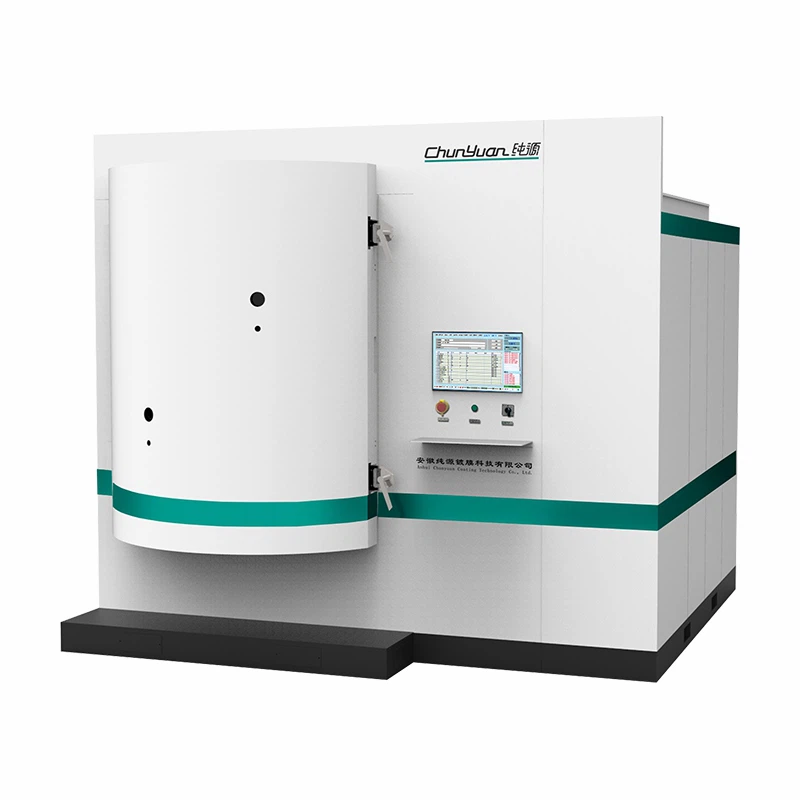
Plasma Etching Thin Film Equipment is a cutting-edge solution designed for precision stripping of thin-film coatings, offering exceptional performance in surface modification and residue removal. Leveraging reactive ion etching (RIE) technology, this equipment combines chemical reactions and physical ion bombardment to achieve uniform and controlled film removal.
Key Advantages:
- Low-Temperature Processing: The Plasma Etching Thin Film Equipment operates at ultra-low temperatures, minimizing thermal stress and preventing substrate deformation. This feature is critical for delicate materials such as polymers and precision optics.
- Adjustable Etching Rate: The distance between the ion source and substrate can be dynamically adjusted via a height-adjustable rotating platform, enabling precise control over etching speed (up to 30 nm/min) to meet diverse process requirements.
- High Uniformity: Equipped with patented ion beam sources and advanced discharge technology, the equipment generates high-density plasma, ensuring uniform etching and consistent results across substrates up to 800 mm in diameter.
- Dual-Functionality: Beyond film removal, this system can be customized for multifunctional applications, including surface cleaning and pre-treatment for subsequent coating processes.
Mechanism and Process:
The Plasma Cleaning Machine operates through a sophisticated interplay of physical bombardment and chemical reactions driven by ionized gas (plasma). At its core, the system generates plasma by applying radiofrequency (RF) energy to a low-pressure gas environment (e.g., oxygen, argon, or nitrogen). This energy dissociates gas molecules into reactive species, including ions, electrons, and free radicals, forming a high-energy plasma cloud.
1,Plasma Generation:
When RF power (typically 13.56 MHz or 40 kHz) is applied to the electrodes within the vacuum chamber, gas molecules undergo ionization. This creates a glow discharge, producing a stable plasma state. The selection of process gases determines the dominant reaction mechanism: oxygen plasma excels at oxidizing organic contaminants, while argon plasma enhances physical sputtering for inorganic residues.
2,Cleaning Mechanism:
- Physical Bombardment: High-energy ions in the plasma collide with surface contaminants, breaking molecular bonds and dislodging particles through kinetic energy transfer. This process effectively removes particulate matter and weakly adhered layers.
- Chemical Reaction: Reactive radicals (e.g., O⁎, OH⁎) interact with organic pollutants, decomposing them into volatile byproducts (CO₂, H₂O) that are evacuated via the vacuum system.
- Surface Activation: Simultaneously, plasma exposure modifies surface chemistry by creating polar functional groups (-OH, -COOH), enhancing wettability and adhesion for subsequent processes.
Pre- and Post-Etching Comparison
- Pre-Etching: Residual carbon-based films (e.g., DLC/ta-C coatings) or contaminants may degrade surface adhesion and optical performance.
- Post-Etching: A pristine, contaminant-free surface is achieved, enhancing adhesion for subsequent coatings and improving product reliability in industries like consumer electronics, optics, and renewable energy.

Technical Specifications:
- Etching Gas: Ar, O₂
- Power Supply: 380V/50Hz, 10 kW
- Vacuum System: Molecular pump with base pressure ≤5.0×10⁻⁴ Pa
- Customization: Chamber size and external dimensions can be tailored to client needs.
Applications:
- Thin-film removal for optical lenses, display panels, and precision tools.
- Surface pre-treatment in 3C electronics, medical devices, and New energy industries.
Hot Tags: plasma etching thin film equipment, China plasma etching thin film equipment manufacturers, suppliers, factory, Dry Etching Equipment, Plasma Spray Machine, , Magnetron Sputter Coating Equipment, Vacuum Evaporation Composite Coating Equipment, Universal Gold Plating Machine