


Nano coating technology has emerged as a revolutionary approach in various industries, offering enhanced protection, durability, and performance. As a leading supplier of Nano Coating Equipment, I often encounter inquiries regarding its applicability in marine equipment coating. This blog aims to explore the feasibility and benefits of using nano coating equipment for marine applications.
Understanding Nano Coating Technology
Nano coating refers to the application of ultra - thin layers of coating material at the nanoscale level (typically less than 100 nanometers). These coatings possess unique properties such as high hardness, chemical resistance, hydrophobicity, and anti - fouling capabilities. The nano coating equipment we supply is designed to deposit these coatings evenly and precisely on different substrates, ensuring consistent and high - quality results.
Challenges in Marine Equipment Coating
Marine environments are extremely harsh for equipment. Saltwater corrosion is one of the most significant problems. The high concentration of salt in seawater accelerates the oxidation process of metals, leading to rust and structural damage. Moreover, marine organisms like barnacles and algae can attach to the equipment surfaces, causing drag, reducing fuel efficiency, and increasing maintenance costs. These fouling organisms also corrode the surfaces over time, further compromising the integrity of the marine equipment.
Advantages of Nano Coatings for Marine Equipment
Corrosion Resistance
Nano coatings can create a dense and impermeable barrier on the surface of marine equipment. For example, some nano - ceramic coatings have excellent chemical stability and can prevent saltwater from reaching the metal substrate. This significantly reduces the rate of corrosion, extending the lifespan of the equipment. Our nano coating equipment can apply these coatings with high precision, ensuring that every part of the equipment is well - protected.
Anti - Fouling Properties
Many nano coatings exhibit hydrophobic and low - surface - energy characteristics. This makes it difficult for marine organisms to attach to the coated surfaces. A smooth and non - sticky surface created by nano coatings can prevent barnacles and algae from adhering, reducing the need for frequent cleaning and anti - fouling treatments. Our DLC Coating Machine can deposit diamond - like carbon coatings that have outstanding anti - fouling properties, which are highly suitable for marine applications.
Improved Durability
The high hardness and wear - resistance of nano coatings enhance the durability of marine equipment. In a marine environment, equipment is often exposed to mechanical impacts from waves, debris, and other vessels. Nano coatings can withstand these impacts better than traditional coatings, protecting the underlying material from damage. Our Sputter Coating Machine can produce coatings with excellent hardness and adhesion, which are crucial for long - term durability in the marine setting.
Reduced Friction
Nano coatings can also reduce the friction between the equipment surface and water. This is particularly beneficial for ships, as it can improve fuel efficiency by reducing the drag force. A smoother surface created by nano coatings allows the vessel to move through the water more easily, resulting in significant energy savings over time.
Types of Nano Coating Equipment for Marine Applications
Physical Vapor Deposition (PVD) Equipment
PVD is a widely used method for applying nano coatings. It involves the vaporization of a coating material in a vacuum chamber and its subsequent deposition on the substrate. Our Sputter Coating Machine is a type of PVD equipment that uses a sputtering process to deposit thin films on the surface of marine equipment. Sputtering can produce coatings with high purity and excellent adhesion, making it suitable for various marine components.

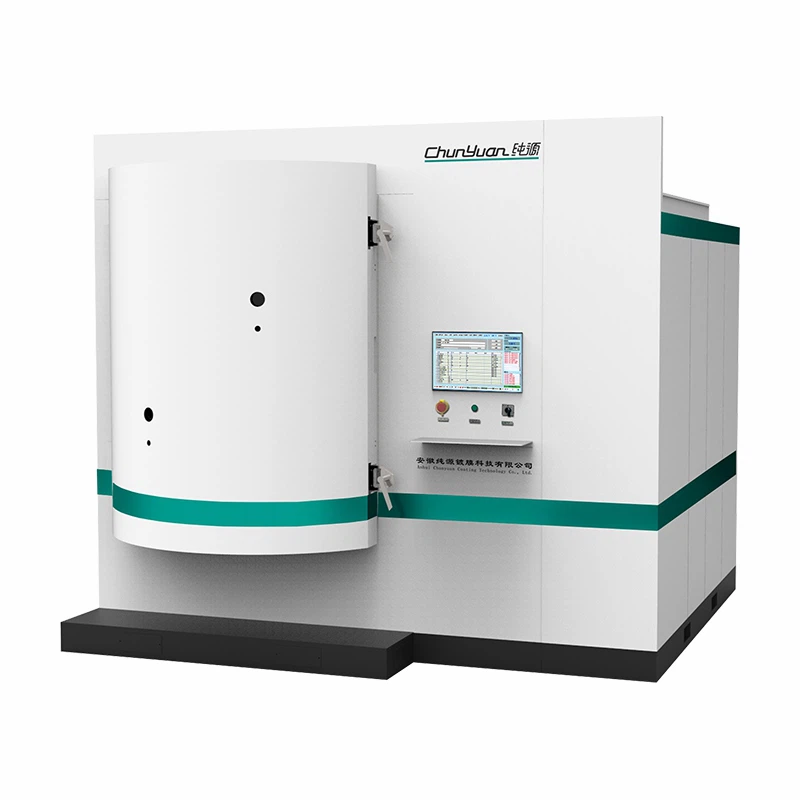
Chemical Vapor Deposition (CVD) Equipment
CVD is another important technique for nano coating. It uses chemical reactions in a gaseous environment to form a coating on the substrate. CVD coatings often have unique properties such as high - temperature resistance and excellent chemical stability. Our advanced CVD - based nano coating equipment can be customized to meet the specific requirements of marine equipment coating.
Plasma Spray Machine
Plasma spraying is a thermal spraying process that can deposit thick coatings at high speeds. Our Plasma Spray Machine can be used to apply nano - structured coatings on large - scale marine equipment. Plasma - sprayed coatings have good bonding strength and can provide effective protection against corrosion and wear.
Case Studies
Several real - world examples have demonstrated the effectiveness of nano coatings on marine equipment. For instance, a shipping company applied a nano - ceramic coating on the hull of one of its vessels using our DLC Coating Machine. After a year of operation in the ocean, the coated hull showed significantly less corrosion and fouling compared to the uncoated hull of another similar vessel. The fuel consumption of the coated vessel also decreased by about 10%, indicating improved efficiency due to reduced drag.
In another case, a marine oil rig platform used our nano - coating technology to protect its pipes and structural components. The nano coating effectively prevented corrosion caused by the contact with saltwater and harsh chemicals in the oil - drilling process. The maintenance frequency was reduced, and the overall service life of the platform components was extended.
Considerations for Using Nano Coating Equipment in Marine Applications
Surface Preparation
Proper surface preparation is crucial for the successful application of nano coatings. The surface of the marine equipment must be clean, free of rust, grease, and other contaminants. Any irregularities on the surface can affect the adhesion and performance of the coating. Our technical team can provide guidance on the appropriate surface - preparation methods for different types of marine equipment.
Coating Thickness
The thickness of the nano coating needs to be carefully controlled. A too - thin coating may not provide sufficient protection, while a too - thick coating may lead to cracking and delamination. Our nano coating equipment is equipped with advanced control systems that can precisely adjust the coating thickness according to the specific requirements of the marine application.
Compatibility
The nano coating material must be compatible with the substrate material of the marine equipment. Different metals, plastics, and composites may require different types of coatings. Our experts can help select the most suitable coating material and equipment configuration based on the substrate material and the intended use of the equipment.
Conclusion
In conclusion, nano coating equipment can indeed be effectively used for marine equipment coating. The unique properties of nano coatings, such as corrosion resistance, anti - fouling, improved durability, and reduced friction, offer significant advantages in the harsh marine environment. Our advanced nano coating equipment, including DLC Coating Machine, Sputter Coating Machine, and Plasma Spray Machine, can provide high - quality and reliable coating solutions for various marine applications.
If you are interested in exploring how our nano coating equipment can meet your marine equipment coating needs, we invite you to contact us for a detailed discussion and consultation. Our experienced team is ready to provide you with customized solutions and technical support.
References
- Doebelin, E. O., & Sheppard, D. L. (2011). Measurement systems: application and design. McGraw - Hill.
- Pawlowski, L. (2008). The science and engineering of thermal spray coatings. John Wiley & Sons.
- Voevodin, A. A., & Donley, M. S. (2006). Chapter two - low - friction hard nanocomposite coatings: what are they and how do they work?. In Surface modification technologies (pp. 50 - 92). Woodhead Publishing.


