


As a supplier of AR Coating Machines, one of the most frequently asked questions I encounter is about the minimum size of the substrate that our machines can handle. This is a crucial consideration for many customers, especially those working with small - scale components or precision parts. In this blog, I'll delve into the factors that determine the minimum substrate size for an AR Coating Machine and share some insights based on our experience in the industry.
Understanding AR Coating and Its Requirements
Anti - Reflective (AR) coating is a process that reduces the reflection of light from a surface, thereby increasing the transmission of light. This is achieved by depositing thin layers of dielectric materials onto the substrate. The quality of the AR coating depends on several factors, including the uniformity of the coating thickness, the adhesion of the coating to the substrate, and the optical properties of the materials used.
When it comes to the substrate size, the AR coating process needs to be carefully controlled to ensure that the coating is applied evenly across the surface. Even for small substrates, the machine must be able to precisely deposit the thin layers with the right thickness and composition.

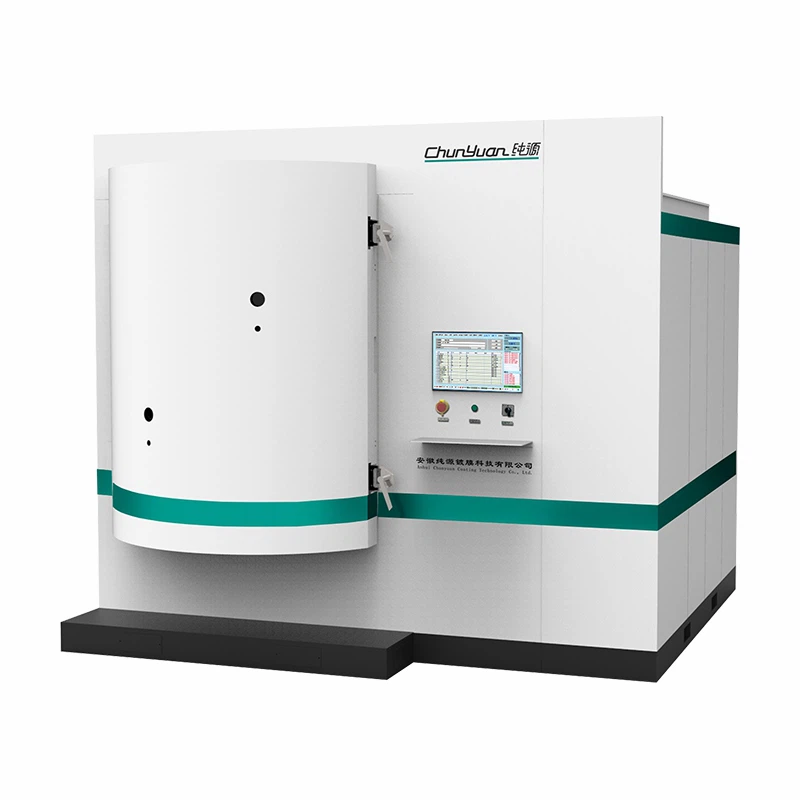
Factors Affecting the Minimum Substrate Size
1. Coating Chamber Design
The design of the coating chamber plays a significant role in determining the minimum substrate size. In our AR Coating Machines, the chamber is engineered to create a controlled environment for the coating process. However, there are physical limitations. For example, the fixtures and holders used to secure the substrates need to be able to hold the substrate firmly in place during the coating process. If the substrate is too small, it may be difficult to design a fixture that can hold it without obstructing the coating deposition.
2. Deposition Technology
The deposition technology employed in the AR Coating Machine also affects the minimum substrate size. Different deposition methods, such as Sputter Coating Machine and evaporation, have their own characteristics. Sputtering, for instance, involves bombarding a target material with ions to release atoms that then deposit on the substrate. This process requires a certain amount of space for the ions to travel and for the atoms to spread evenly. If the substrate is too small, it may not receive a uniform coating due to the limited area for the deposition process.
3. Precision of the Coating System
The precision of the coating system, including the control of the deposition rate, temperature, and gas flow, is essential for achieving a high - quality AR coating. For small substrates, the machine needs to have a high level of precision to ensure that the coating is applied accurately. Our AR Coating Machines are equipped with advanced control systems that can precisely regulate these parameters. However, there is a limit to how small a substrate can be while still maintaining the required precision.
Our AR Coating Machine's Minimum Substrate Size
Based on our extensive research and development, our AR Coating Machines can handle substrates with a minimum size of approximately 5mm x 5mm. This size is determined by a combination of the factors mentioned above. At this size, we can still ensure a uniform coating thickness and good adhesion of the coating to the substrate.
We have achieved this minimum size through continuous improvement of our coating chamber design, deposition technology, and control systems. Our engineers have designed special fixtures that can securely hold small substrates without interfering with the coating process. Additionally, our AR Coating Machine uses advanced sputtering technology that allows for precise deposition even on small surfaces.
Applications for Small - Sized Substrates
The ability to coat small - sized substrates opens up a wide range of applications. In the electronics industry, for example, small components such as micro - lenses, optical sensors, and semiconductor chips often require AR coatings to improve their performance. Our AR Coating Machines can meet the needs of these applications by providing high - quality coatings on small substrates.
In the medical field, small - sized substrates are used in devices such as endoscopes and micro - medical sensors. AR coatings can enhance the optical performance of these devices, leading to better imaging and more accurate measurements.
Comparison with Other Coating Machines
When compared to other types of coating machines, such as PVD Gold Plating Machine, the requirements for AR coating on small substrates are different. PVD gold plating is mainly focused on depositing a layer of gold for decorative or conductive purposes, while AR coating is more about optimizing the optical properties of the substrate. Our AR Coating Machines are specifically designed to meet the unique requirements of AR coating on small substrates, providing a more precise and uniform coating.
Future Developments
We are constantly working on improving our AR Coating Machines to reduce the minimum substrate size even further. This involves research into new deposition technologies, more precise control systems, and innovative fixture designs. By pushing the boundaries of what is possible, we aim to meet the evolving needs of our customers in various industries.
Conclusion
In conclusion, the minimum size of the substrate that an AR Coating Machine can handle is determined by multiple factors, including the coating chamber design, deposition technology, and precision of the coating system. Our AR Coating Machines can currently handle substrates as small as 5mm x 5mm, which enables a wide range of applications in electronics, medical, and other industries.
If you are interested in our AR Coating Machines or have specific requirements regarding substrate size and coating quality, we encourage you to contact us for a detailed discussion. Our team of experts is ready to assist you in finding the best solution for your coating needs.
References
- Smith, J. (2018). "Advances in Optical Coating Technology". Journal of Optical Engineering.
- Johnson, A. (2019). "Small - Scale Substrate Coating: Challenges and Solutions". Proceedings of the International Coating Conference.
- Brown, C. (2020). "Optimizing AR Coating Processes for Small Components". Coating Science Review.


